Attic Mold: Causes, Warning Signs, and Professional Removal
Most homeowners rarely check their attics. As long as the roof isn’t leaking and the ceiling looks fine, there’s usually no reason to go up there. Unfortunately, this gives mold plenty of time to grow unnoticed.
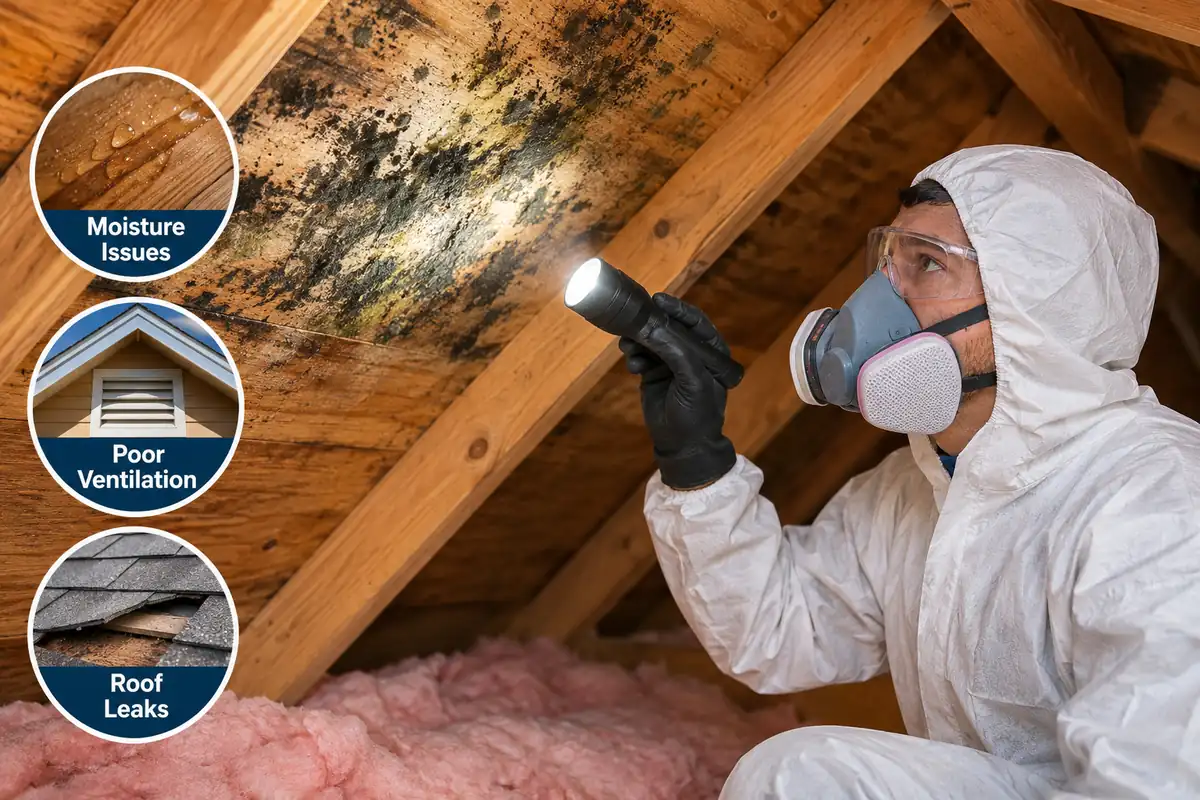
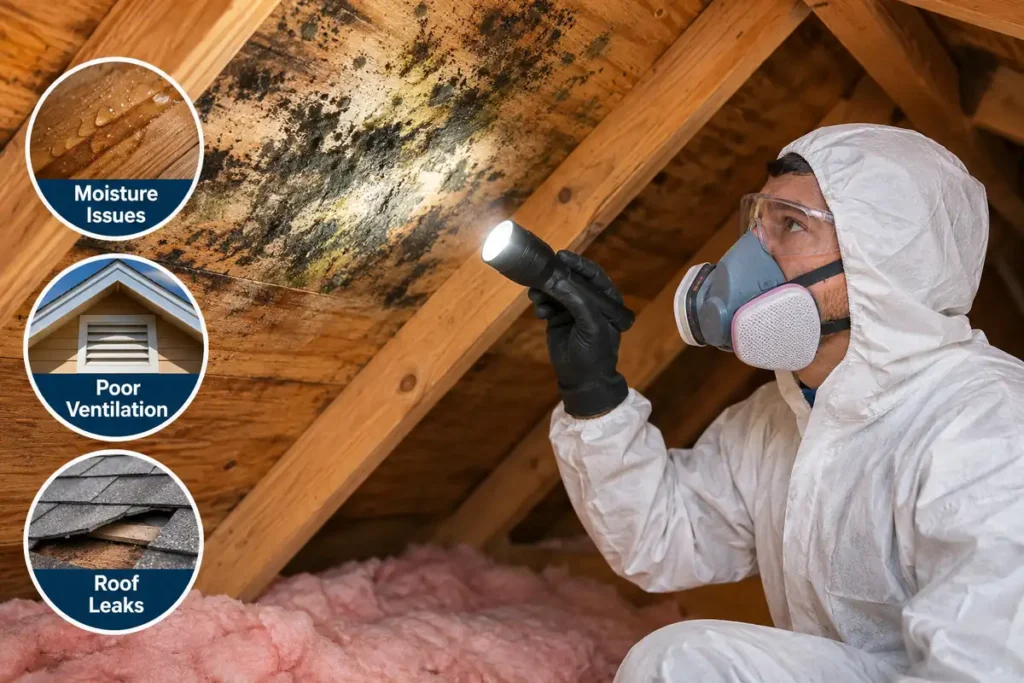
Attic mold often develops when moisture becomes trapped around roof sheathing, insulation, or wooden framing. Poor ventilation, roof leaks, and bathroom exhaust fans that release humid air into the attic are some of the most common causes.
In Santa Barbara, California, coastal moisture, seasonal rainfall, and temperature changes can contribute to damp attic conditions, especially in older homes with limited ventilation.
Understanding what causes attic mold, how to recognize it, and when to seek professional help can prevent a small moisture problem from turning into expensive repairs.
What Causes Mold to Grow in an Attic?
Mold needs moisture and a suitable surface to grow. Attics contain plenty of materials that can support mold growth, including wood, dust, and paper-faced building products.
The main issue is usually excess moisture that cannot escape.
1. Poor Attic Ventilation
An attic needs adequate airflow to help remove accumulated moisture. When soffit vents are blocked by insulation or roof vents are insufficient, humid air may remain trapped.
As the attic cools overnight, moisture can condense on colder surfaces, particularly roof decking and exposed nails.
Over time, repeated condensation can create conditions for mold growth.
2. Roof Leaks and Damaged Flashing
Even a small roof leak can introduce enough moisture to support mold.
Common entry points include:
- Cracked or displaced roof tiles
- Damaged roof flashing
- Deteriorated roof penetrations
- Leaks around chimneys and skylights
- Worn roofing underlayment
Santa Barbara homes with aging tile roofs may experience leaks when the underlayment deteriorates, even when the visible tiles appear intact.
3. Bathroom Exhaust Fans Venting Into the Attic
Bathroom exhaust fans should discharge outdoors, not into the attic.
When warm, humid air from showers enters an enclosed attic, moisture can collect on wooden framing and roof sheathing.
This problem may remain unnoticed for years because homeowners rarely inspect the exhaust ductwork.
4. Air Leaks and Moisture From Living Spaces
Warm indoor air can enter the attic through gaps around recessed lights, plumbing penetrations, and attic access panels.
If that air contains enough moisture, condensation may develop on cooler attic surfaces.
Poorly sealed HVAC ducts located in attic spaces can also contribute to moisture problems.
What Are the Warning Signs of Attic Mold?
Attic mold isn’t always visible from inside the living area. However, certain warning signs may indicate a moisture problem above the ceiling.
Dark Spots on Roof Sheathing
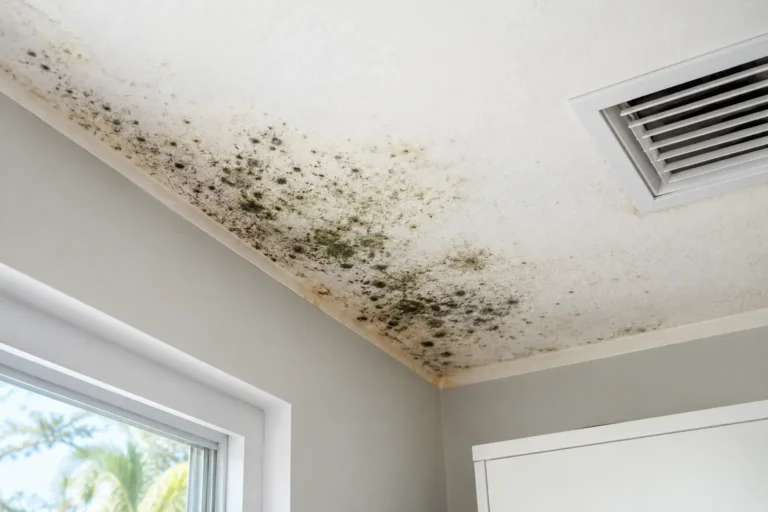
Black, gray, green, or brown discoloration on wooden roof decking may indicate mold growth.
Not every dark stain is mold. Water stains, dirt, and natural wood discoloration can look similar, so visual appearance alone isn’t enough for a reliable diagnosis.
Musty Odors
A persistent musty smell near attic access points or upstairs ceilings may indicate damp materials or microbial growth.
The odor may become more noticeable after rainfall or during periods of high humidity.
Damp or Discolored Insulation
Wet insulation is another warning sign.
Moisture can reduce insulation performance and create conditions that allow mold to develop on nearby wood or paper-faced materials.
Water Stains on Ceilings
Brown or yellow ceiling stains may indicate water entering through the roof or condensation forming above the ceiling.
Even if the stain dries, the original moisture source may still exist.
Can attic mold spread into living spaces?
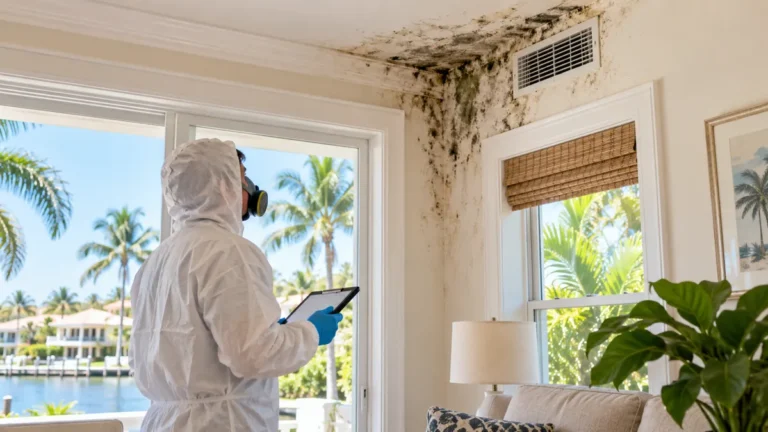
It is possible for mold particles from an attic to enter occupied rooms through air leaks, ductwork defects, or openings around the attic hatch. However, the extent of exposure depends on the building’s airflow and the location of the contamination.
Why Attic Mold Is a Concern for Santa Barbara Homes
Santa Barbara’s coastal environment creates moisture conditions that homeowners should understand.
Homes near the waterfront, Mesa, and other coastal neighborhoods may experience marine-layer humidity and overnight condensation. Properties in hillside neighborhoods, including the Riviera, may also have attic ventilation challenges depending on roof design and construction.
Older properties can have additional vulnerabilities, such as deteriorated roof underlayment, blocked vents, or improperly installed exhaust ducts.
These conditions don’t automatically mean a home has mold. They simply make moisture management particularly important.
How Do Professionals Remove Mold From an Attic?
Professional attic mold remediation involves more than cleaning visible stains.
The goal is to address the contamination while correcting the moisture conditions responsible for the growth.
Step 1: Attic Inspection
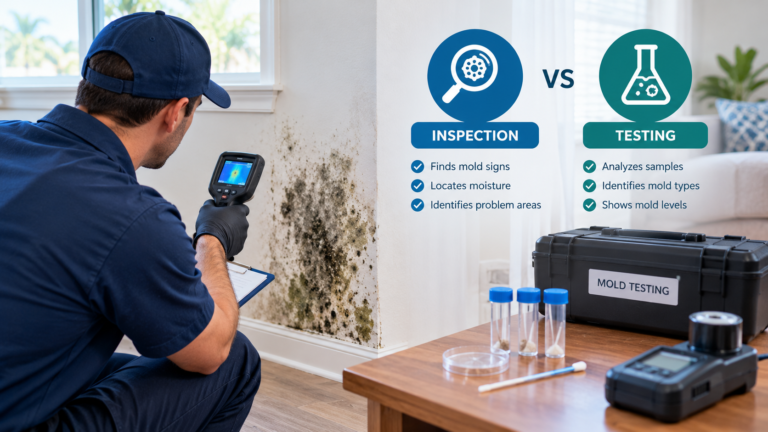
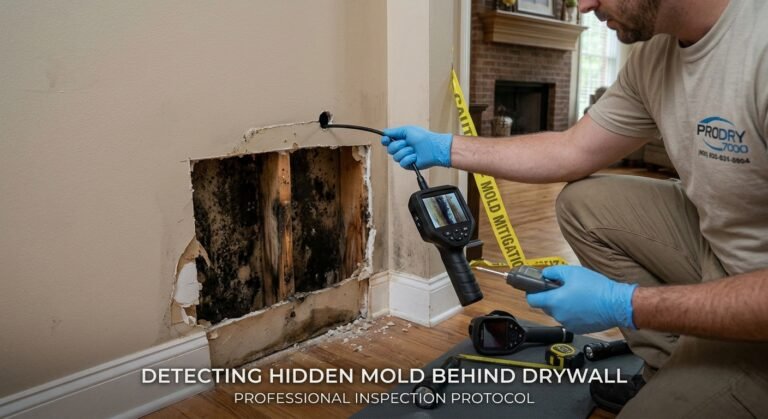
A mold professional examines the attic for visible growth, water intrusion, condensation, ventilation problems, and damaged building materials.
Moisture meters and other inspection equipment may help identify affected areas.
Step 2: Containment and Safety Measures
Depending on the extent of contamination, technicians establish appropriate containment and use protective equipment to limit the movement of mold particles.
Step 3: Mold Removal and Cleaning
Professionals may use HEPA vacuuming, controlled cleaning methods, and other techniques suitable for the affected materials.
Severely damaged or unsalvageable materials may require removal and replacement.
Simply spraying bleach or painting over mold does not correct the underlying moisture problem.
Step 4: Moisture Source Correction
Any roof leaks, ventilation deficiencies, or improperly routed exhaust ducts must be addressed to reduce the likelihood of mold returning.
Step 5: Final Evaluation
After remediation, the affected area should be evaluated to confirm that the work is complete, materials are dry, and the original moisture problem has been addressed.
Can You Remove Attic Mold Yourself?
Small areas of surface mold may sometimes be manageable for homeowners, provided the affected materials are accessible and the moisture source has been corrected.
However, attic work presents additional hazards, including exposed electrical wiring, limited walking surfaces, insulation disturbance, and potential falls.
The EPA generally recommends considering professional assistance when mold contamination exceeds approximately 10 square feet.
If mold covers large sections of roof sheathing, returns after cleaning, or results from ongoing water intrusion, professional evaluation is the safer choice.
How Can You Prevent Attic Mold From Returning?
Preventing attic mold starts with controlling moisture.
Homeowners should inspect their roofs after significant storms, keep attic vents unobstructed, ensure bathroom exhaust fans terminate outdoors, and address plumbing or HVAC leaks promptly.
It also helps to inspect the attic periodically for damp insulation, condensation, and fresh staining.
For Santa Barbara properties, checking the attic after the winter rainy season can help catch moisture problems before they worsen.
Frequently Asked Questions About Attic Mold
Is attic mold dangerous?
Attic mold can contribute to indoor air quality concerns, particularly when contaminated air enters living spaces. Health effects vary depending on exposure and individual sensitivity.
Does attic mold mean I need a new roof?
Not necessarily. Some attic mold problems result from condensation or poor ventilation rather than roof failure. An inspection can help determine the actual cause.
Will attic mold go away on its own?
Mold growth may stop when materials become dry, but existing contamination does not simply disappear. Cleaning or material removal may still be necessary.
How long does attic mold removal take?
The timeline depends on the affected area, accessibility, material damage, and moisture repairs. Smaller projects may take a day or two, while extensive remediation can take longer.
When to Schedule Professional Attic Mold Removal
Attic mold is often a sign of a moisture problem that needs attention. Ignoring dark stains, musty odors, or damp insulation may allow the underlying damage to continue.
If you suspect mold in your Santa Barbara attic, a professional inspection can help identify the source, assess the affected materials, and determine whether remediation is necessary.
Addressing the moisture problem early is usually easier than dealing with widespread contamination and damaged roof materials later.