Signs of Mold Behind Drywall: What Homeowners Should Know
Discovering mold inside your home is a major concern, but what happens when the contamination is hidden out of sight? Because sheetrock creates a completely enclosed barrier, toxic spores often spread inside wall cavities long before any dark spots show up on your paint.
Knowing the subtle warning signs of hidden mold allows you to take action early—saving thousands of dollars in structural repairs and protecting your indoor air quality.
The Hidden Danger: Why Mold Loves Wall Cavities
Mold requires three simple elements to thrive: darkness, elevated moisture, and an organic food source. Wall cavities provide the ultimate environment.
The core of standard drywall is wrapped in cellulose paper—a prime organic food source for mold spores. When a pinhole plumbing leak or elevated humidity introduces moisture inside an unventilated wall cavity, mold begins colonizing in as little as 24 to 48 hours.
In humid coastal regions like South Florida, the risk is even higher. High ambient humidity combined with continuous air conditioning creates constant temperature differentials across walls. Warm exterior air hitting cool air-conditioned interior sheetrock leads to trapped condensation, feeding hidden microbial growth behind living room, bedroom, and bathroom walls.
5 Unmistakable Warning Signs of Mold Behind Drywall
Since you cannot see inside your walls without specialized tools, watch for these five common physical indicators:
1. Persistent Musty or Earthy Odors (mVOCs)
As active mold colonies feed on drywall paper and wood studs, they release gases known as Microbial Volatile Organic Compounds (mVOCs). This creates a distinct, stale, musty smell—similar to wet cardboard or damp soil. If you notice an unpleasant odor that lingers even after deep cleaning, smell closely around baseboards, electrical outlet boxes, and light switch plates, where air currents push out from behind the wall.
2. Visible Wall Discoloration and Paint Blemishes
When hidden mold grows deep enough to penetrate the sheetrock core, it eventually affects the exterior finish. Look for:
- Yellowish, brown, or dark staining creeping up from the baseboards.
- Bubbling, peeling, or flaking paint caused by moisture pressure pushing from inside the wall outward.
- Wallpaper that appears discolored, bubbled, or unglued along the seams.
3. Physical Wall Deterioration
Sustained moisture weakens the structural integrity of gypsum board. Gently press on suspicious areas along your wall. If the drywall feels soft, spongy, or leaves an indentation, the internal core has deteriorated from moisture and mold damage. You may also notice baseboards that are warped, cupped, or pulled slightly away from the floor.
4. Unexplained Indoor Allergy Symptoms
If family members experience persistent sneezing, coughing, watery eyes, skin irritation, or sinus headaches that improve whenever they leave the house, airborne spores may be escaping from your wall cavities. HVAC systems often draw air from hidden wall spaces and circulate spores throughout the entire building.
5. Past Plumbing Leaks or AC Condensate Overflows
If you previously experienced a burst pipe, a leaking fixture, or an overflowing AC drain line, moisture likely soaked into the floor plates and lower wall cavity. Even if the surface carpet or tile was dried, dampness trapped inside the wall core often leads to delayed mold growth weeks later.
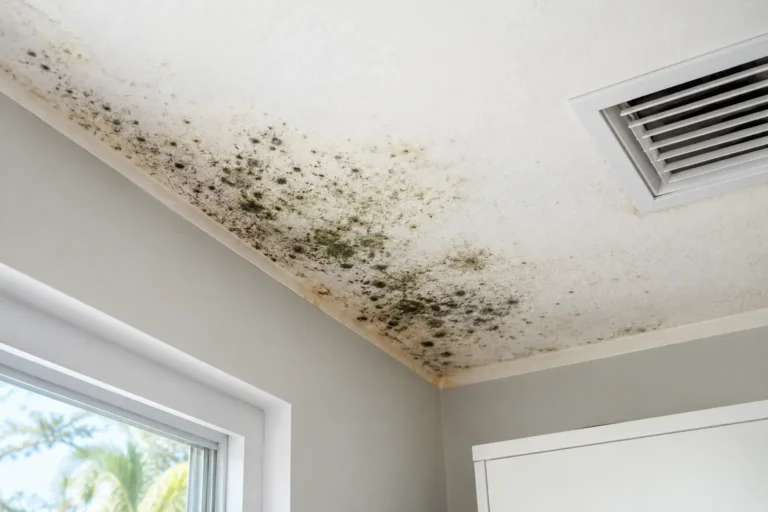
Note: If water is dripping down from upper framing or floor joists, understanding mold on the ceiling: causes, warning signs, and removal can help you identify whether upper plumbing lines or roof leaks are the primary culprit.
How Professionals Detect Mold Behind Walls (Without Destroying Your Sheetrock)
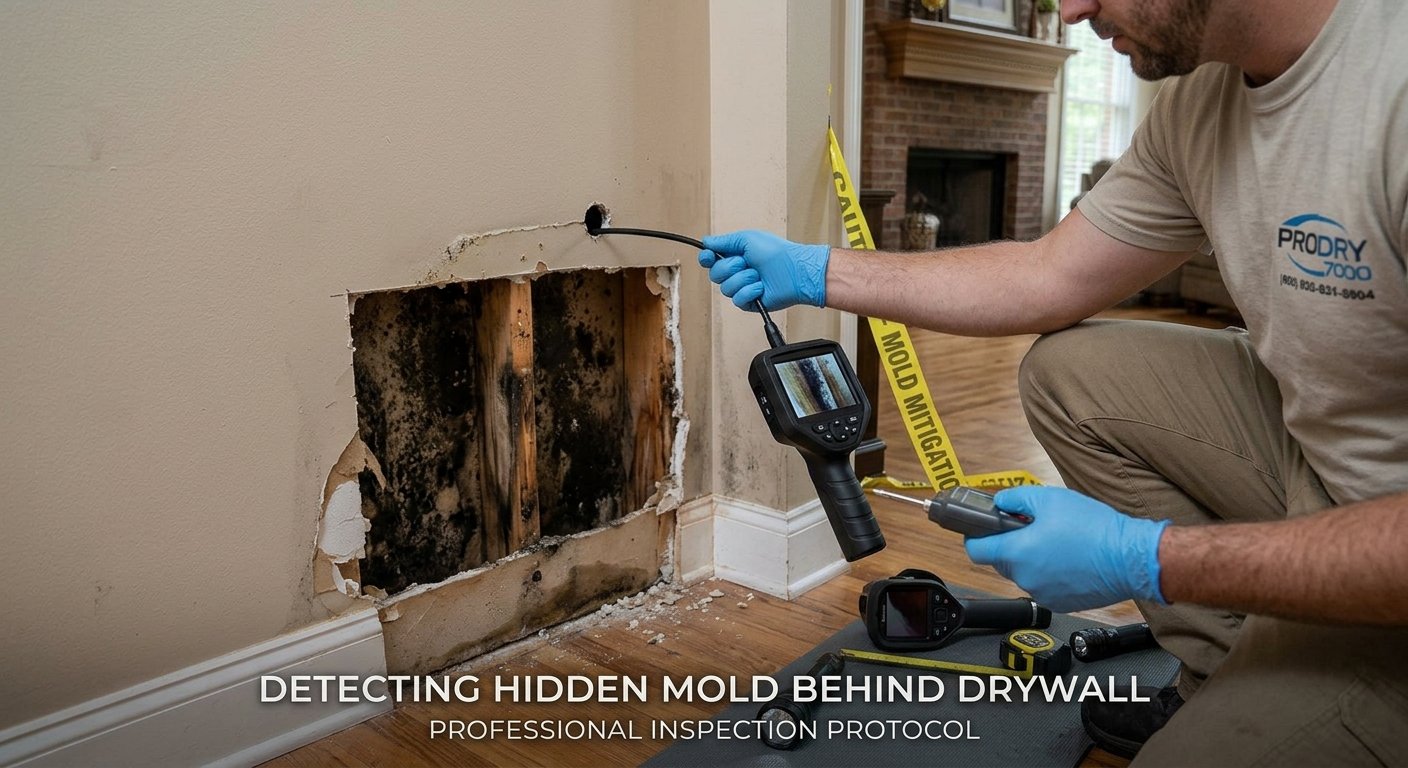
A common mistake homeowners make is tearing into walls with a hammer or saw to inspect suspicious areas. Cutting into contaminated drywall disturbs active colonies, releasing millions of mold spores directly into your living space and HVAC ductwork.
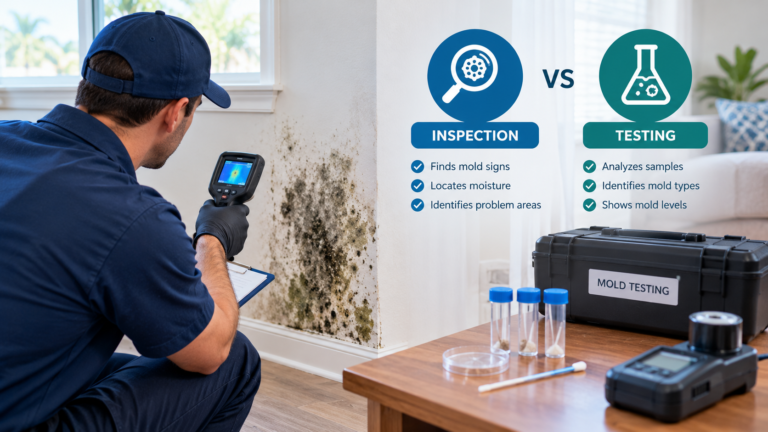
Remediation experts use non-invasive diagnostic tools to pinpoint hidden contamination safely:
[Infrared Thermal Imaging] ➔ [Pinless Moisture Meters] ➔ [Borescope Camera Inspection] ➔ [Wall Cavity Air Sampling]
- Thermal Imaging (Infrared Cameras): Infrared cameras detect surface temperature variations. Because damp drywall is cooler than dry drywall, thermal imaging pinpoints exact moisture pockets behind walls instantly.
- Digital Moisture Meters: Using both pinless surface scanners and deep-penetration probe meters, technicians measure the exact moisture content inside the gypsum core and wood framing without damaging your wall finish.
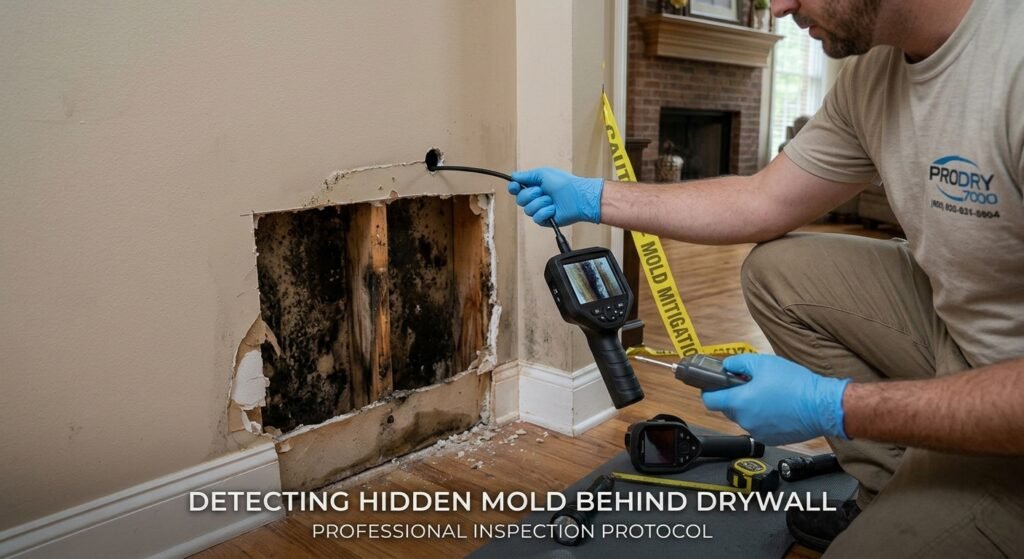
- Borescope Inspection Cameras: By drilling a tiny, unobtrusive hole behind a baseboard or outlet cover, technicians insert a flexible camera with a light source to visually inspect the internal wall cavity.
- Wall Cavity Air Sampling: Using specialized sampling cassettes, air is drawn directly from inside the wall frame to measure spore counts compared to normal indoor baseline air.
How Much Does It Cost to Remove Mold Behind Drywall in Boca Raton?
The cost to remediate mold behind drywall varies based on how far the contamination has spread through the wall cavity:
| Remediation Scope | Estimated Cost Range | Key Work Included |
| Minor Wall Contamination (< 10 sq. ft.) | $500 – $1,500 | Spot containment, localized drywall removal, HEPA vacuuming, sanitization. |
| Moderate Cavity Contamination (Single Room) | $1,500 – $3,500 | Full room containment zipper walls, air scrubbing, drywall & insulation replacement. |
| Extensive Structural Remediation | $3,500 – $7,000+ | Multi-room containment, stud framing restoration, deep HVAC duct cleaning. |
Does Insurance Cover Hidden Wall Mold?
Homeowner insurance policies generally cover mold remediation if the damage stems from a sudden, accidental water incident (such as a burst supply line or broken water heater). Insurance usually denies claims resulting from long-term deferred maintenance, slow unaddressed leaks, or continuous high indoor humidity.
Step-by-Step: What to Do If You Suspect Mold Behind Your Walls
If you notice musty smells, soft sheetrock, or discolored paint, follow these steps immediately:
- Stop Active Water Sources: Turn off supply lines to nearby sinks, toilets, or appliances, and check your AC condensate drain line to ensure it is draining properly.
- Do Not Disturb the Area: Avoid scraping, sanding, or spraying bleach on suspicious spots. Bleach is water-based and cannot penetrate porous drywall, often adding unwanted moisture to the problem.
- Isolate the Room: Close doors and turn off forced-air heating or air conditioning to prevent spores from traveling to unimpacted rooms.
- Call a Certified Remediation Specialist: Schedule a professional inspection using thermal imaging and moisture metering to confirm the presence of mold before removing any materials.
How to Prevent Mold from Returning Behind Your Walls
Once your walls are repaired, taking preventive steps stops mold from taking hold again:
- Maintain Safe Indoor Humidity: Keep indoor Relative Humidity (RH) between 45% and 55%. Use whole-home dehumidifiers if your AC system struggles with summer humidity.
- Service AC Condensate Lines Regularly: Flush air conditioner drain lines quarterly with vinegar or hot water to prevent clogs that back up into closet walls.
- Use Mold-Resistant Drywall in Wet Zones: When rebuilding bathrooms, laundry rooms, or utility closets, install fiberglass-faced or green-board drywall rather than standard paper-faced sheetrock.
Need an Expert Mold Inspection in Boca Raton, FL?
If you smell musty odors or suspect hidden mold behind your walls, don’t wait for structural damage to spread. Our local team provides non-invasive thermal imaging assessments and complete mold remediation tailored to South Florida homes.