Mold Inspection vs Mold Testing: What Is the Difference?
If you suspect mold in your Boca Raton home, you may be wondering whether you need a mold inspection, mold testing, or both. Many homeowners use these terms interchangeably, but they are actually two different services that serve different purposes.
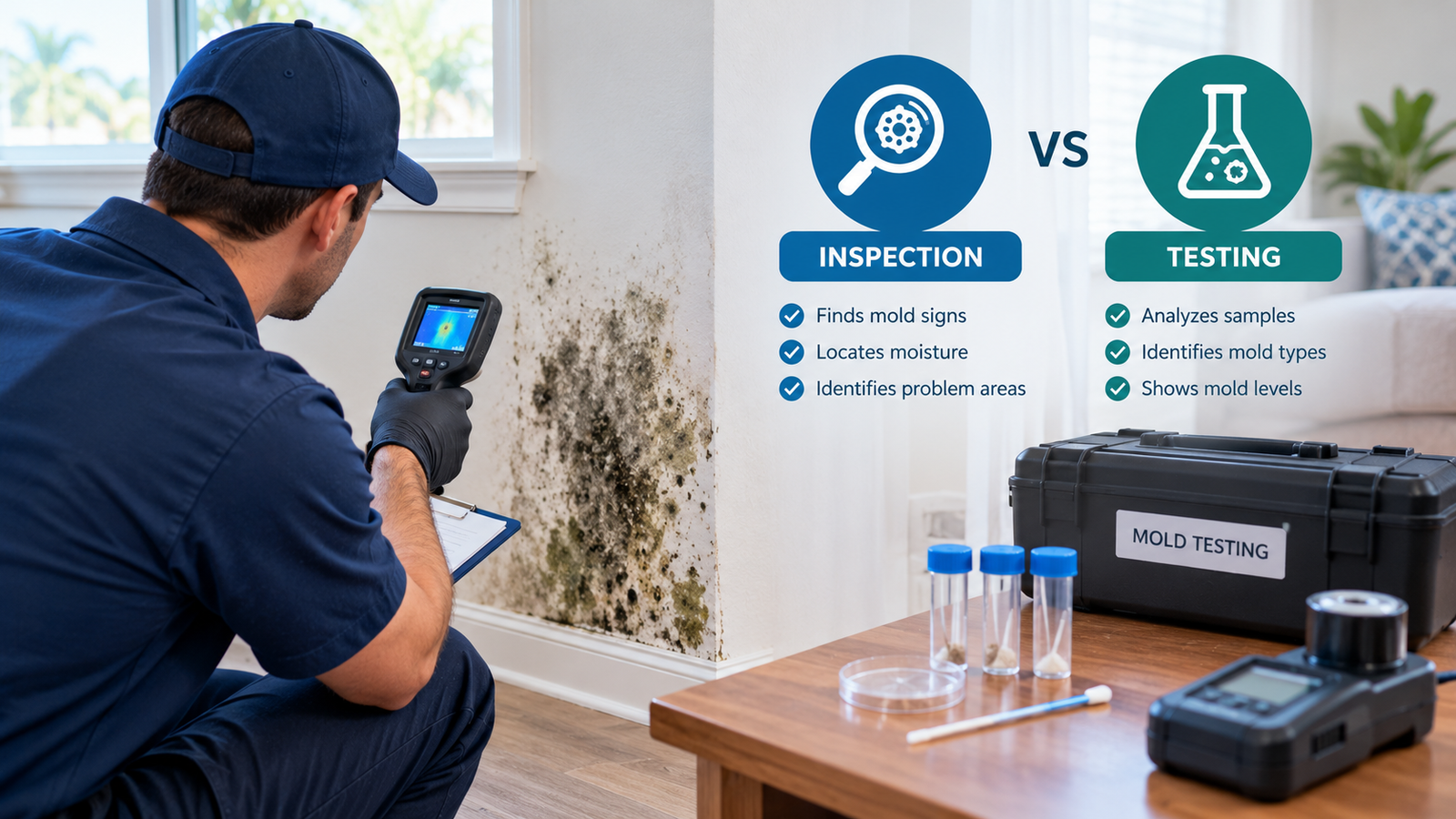
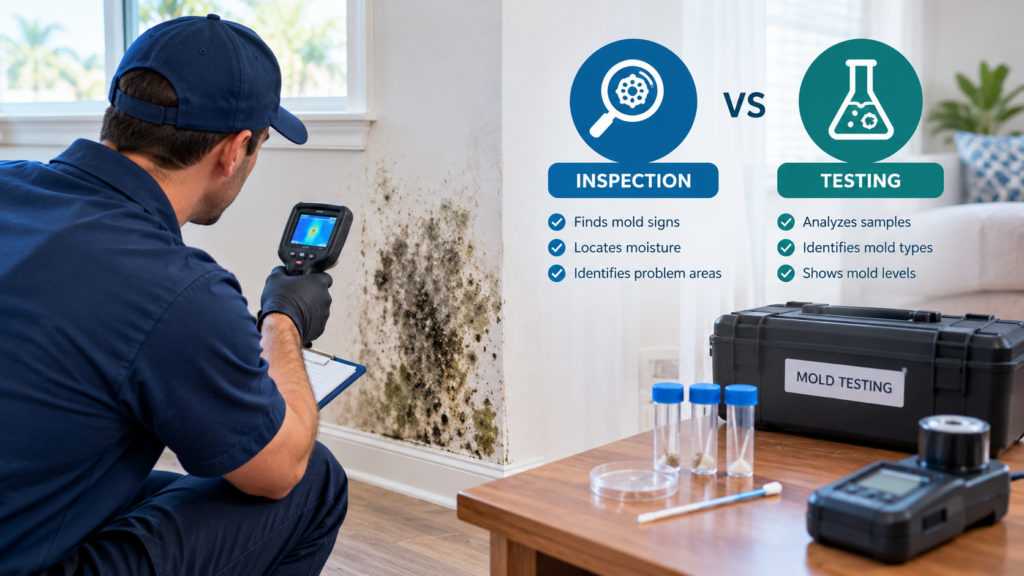
A mold inspection focuses on finding signs of mold growth, identifying moisture problems, and locating areas where mold may be developing. Mold testing, on the other hand, involves collecting samples to determine the type and amount of mold present.
Understanding the difference between mold inspection and mold testing can help you choose the right solution, protect your property, and address mold problems before they become more serious.
In humid areas like Boca Raton, Florida, where moisture, heavy rainfall, and air conditioning issues are common, knowing when to schedule professional mold services is especially important.
What Is a Mold Inspection?
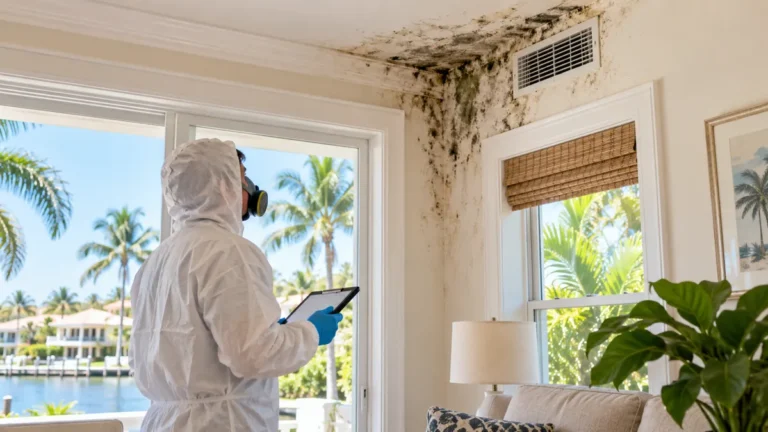
A mold inspection is a professional evaluation of a property to identify signs of mold growth, moisture issues, and conditions that may encourage mold development.
The main purpose of a mold inspection is not only to find visible mold but also to determine why mold is growing and where the moisture problem is coming from.
During an inspection, a trained professional examines areas of the home where mold commonly develops, including:
- Bathrooms
- Kitchens
- Attics
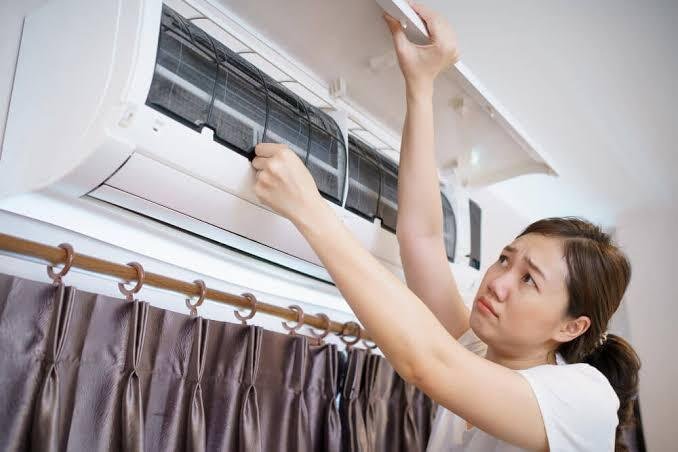
- HVAC systems
- Crawl spaces
- Around windows
- Under sinks
- Areas affected by leaks or water damage
A mold inspection can help uncover hidden problems that may not be obvious to homeowners.
What Happens During a Mold Inspection?
A professional mold inspection usually includes several steps:
Visual Examination
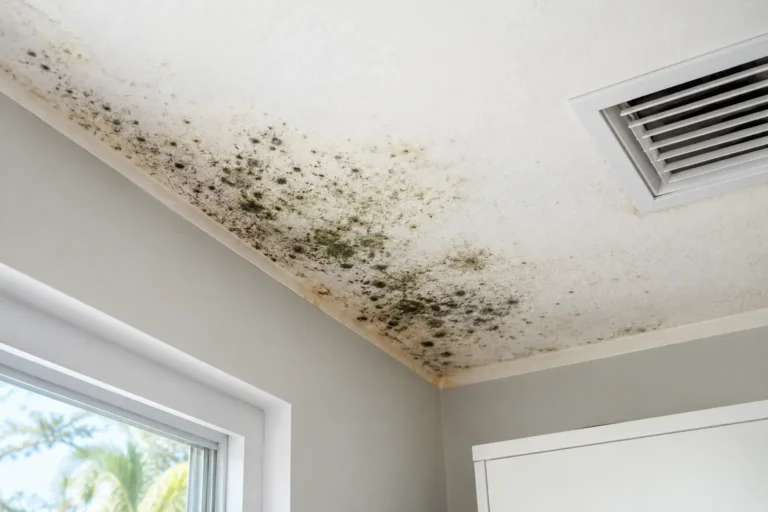
The inspector checks the property for visible signs of mold, including:
- Black, green, or white mold growth
- Water stains
- Discoloration
- Peeling paint or wallpaper
- Damaged drywall
- Musty odors
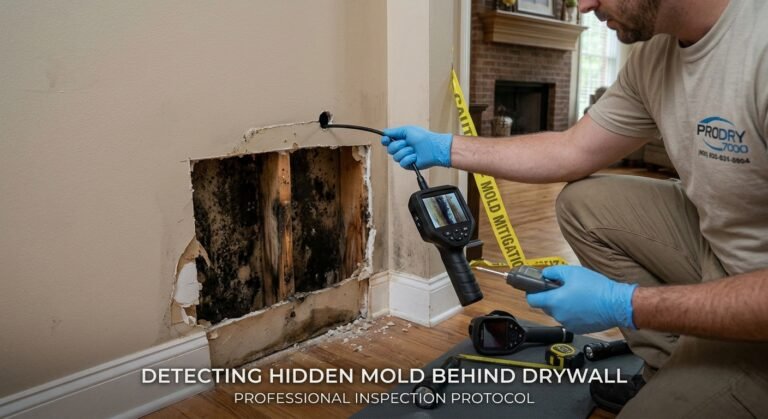
Moisture Detection
Since mold requires moisture to grow, finding the source of water is a critical part of the inspection.
Professionals may use tools such as:
- Moisture meters
- Infrared cameras
- Humidity measurements
These tools help identify damp areas behind walls, ceilings, and other hidden spaces.
Identifying Mold-Prone Areas
A good inspection looks beyond visible mold and checks areas where mold commonly hides, especially in Florida homes.
Common problem areas include:
- Leaking pipes
- Roof leaks
- Poor ventilation
- AC condensation problems
- Flood damage
What Is Mold Testing?
Mold testing is the process of collecting samples from a property to determine the presence, type, and concentration of mold spores.
Unlike an inspection, which focuses on locating mold problems, testing provides laboratory information about the mold found in the home.
Mold testing can be useful when:
- Mold is suspected but not visible
- A homeowner wants confirmation of mold presence
- There are concerns about indoor air quality
- Documentation is needed for insurance or real estate purposes
Common Types of Mold Testing
Air Sampling
Air sampling collects air samples to measure the concentration of mold spores in the indoor environment.
This type of testing can help compare indoor air quality with outdoor conditions.
Surface Sampling
Surface sampling involves collecting material directly from a suspected mold area.
Examples include:
- Swabbing visible growth
- Taking samples from walls or surfaces
This helps identify what type of mold is present.
Bulk Sampling
Bulk sampling involves removing a small piece of material, such as drywall or insulation, for laboratory analysis.
This method may be used when mold contamination is suspected inside building materials.
Mold Inspection vs Mold Testing: Key Differences
Although mold inspection and mold testing are related, they are not the same.
| Mold Inspection | Mold Testing |
|---|---|
| Identifies signs of mold problems | Identifies mold types and levels |
| Looks for moisture sources | Analyzes collected samples |
| Includes visual examination | Requires laboratory testing |
| Helps locate mold growth | Provides detailed mold information |
| Focuses on the cause of the problem | Focuses on identifying the mold |
Do You Need Mold Inspection, Mold Testing, or Both?
The right choice depends on your situation.
When You Need a Mold Inspection
A mold inspection may be the best option if:
- You notice a musty smell
- You see visible mold growth
- Your home has experienced water damage
- You suspect hidden moisture problems
- You want to identify the source of mold growth
For many homeowners, finding and fixing the moisture source is the most important first step.
When You Need Mold Testing
Mold testing may be helpful if:
- Mold is suspected but cannot be seen
- You need to identify the type of mold
- You are buying or selling a property
- There are concerns about indoor air quality
- You need professional documentation
When You Need Both Mold Inspection and Testing
In some situations, both services may provide the most complete information.
Examples include:
- Extensive water damage
- Repeated mold problems
- Commercial property concerns
- Real estate transactions
- Unknown sources of mold odors
An inspection can locate the problem, while testing can provide additional details about the mold present.
Why Mold Inspection Is Important in Boca Raton Homes
Boca Raton’s warm and humid climate creates conditions where mold can grow quickly when moisture problems occur.
Common causes of mold growth in Florida homes include:
- High indoor humidity
- Heavy rainfall
- Storm damage
- Roof leaks
- Plumbing problems
- AC system condensation
- Poor ventilation
Even a small moisture issue can create an environment where mold grows behind walls, under flooring, or inside air conditioning systems.
Regular inspections can help homeowners identify problems early and avoid expensive repairs.
How Much Does Mold Inspection and Testing Cost?
The cost of mold services depends on several factors, including:
- Size of the property
- Number of affected areas
- Type of inspection required
- Number of samples collected
- Laboratory analysis fees
A basic inspection may cost less than extensive testing because testing requires sample collection and laboratory evaluation.
The best approach is to focus on solving the actual mold problem rather than only identifying the mold type.
Can You Test for Mold Yourself?
Many DIY mold testing kits are available online and in stores. While these kits may provide basic information, they have limitations.
DIY testing may not:
- Identify the source of moisture
- Find hidden mold growth
- Provide a complete assessment of the property
Professional mold inspections are more comprehensive because they evaluate the entire environment, not just one sample.
If you have visible mold, water damage, or ongoing moisture issues, a professional evaluation is usually the better option.
What Happens After a Mold Inspection or Testing?
After the inspection or testing process, the next steps depend on the results.
A typical mold solution may include:
- Identifying and fixing the moisture source
- Removing contaminated materials
- Cleaning affected areas
- Improving ventilation and humidity control
- Taking steps to prevent future mold growth
Removing mold without addressing the moisture problem can allow it to return.
Frequently Asked Questions About Mold Inspection and Testing
Is mold inspection the same as mold testing?
No. A mold inspection identifies mold problems and moisture sources, while mold testing analyzes samples to determine mold types and levels.
Do I need mold testing if I can already see mold?
Not always. If visible mold is present, the priority is usually identifying the cause and removing the contamination. Testing may be recommended in certain situations.
How long does a mold inspection take?
The inspection time depends on the size of the property and the complexity of the problem. Larger homes or properties with hidden moisture issues may require more time.
Final Thoughts
Understanding the difference between mold inspection vs mold testing helps homeowners make better decisions when dealing with possible mold problems.
A mold inspection focuses on finding the source of the problem, while mold testing provides information about the mold itself. In many cases, identifying moisture issues and taking action quickly is the most important step in protecting your home.
If you suspect mold growth in your Boca Raton property, professional help can provide a clearer understanding of the problem and the right solution.
Contact Mold Removal Boca Raton Florida for expert mold inspection and remediation services to help protect your home from mold damage.